The Best Water Softening Systems in Doylestown
If you live in Doylestown or anywhere in Bucks County, you’ve probably noticed signs of hard water—spots on dishes, dry skin, or that crusty buildup around your faucets. While it’s a common issue, it doesn’t have to be a permanent one. In this guide, we’ll walk you through everything you need to know about water softener systems in Doylestown—why they matter, how they work, and how to choose the right one for your home.
Water quality directly affects your health, home, and daily comfort. Poor water can contain minerals, chemicals, and contaminants that impact everything from the taste of your drinking water to the condition of your plumbing and appliances.
Why Water Quality Matters in Doylestown
Hard water is one of the most common concerns for homeowners in this part of Pennsylvania. The water here often contains elevated levels of minerals like calcium and magnesium, which can cause everything from mineral stains on your sinks to reduced lifespan in your water-using appliances.
-
Everyday Signs of Hard Water – If you’ve seen white spots on your dishes, buildup on showerheads, or soap that won’t lather properly, those are all signs your home may have hard water. Over time, it can also leave your skin feeling dry and itchy, or even damage clothing in the wash. From better-tasting drinking water to softer skin and hair, the benefits of water treatment in Doylestown extend to every aspect of daily life. Understanding what’s in your water helps determine which treatment companies in Doylestown can best solve your specific problems.
-
Long-Term Costs of Ignoring It – Beyond the daily annoyances, untreated hard water can lead to bigger problems. Mineral deposits inside pipes and water heaters can restrict flow, reduce efficiency, and shorten the lifespan of major appliances like dishwashers and washing machines. The longer it goes unaddressed, the more you could spend on repairs or replacements.

How Water Softener Systems Work
To understand how water softener systems in Doylestown can improve your home’s water quality, it helps to know what’s actually happening inside your plumbing. The process may sound technical, but at its core, it’s about one simple thing: removing excess minerals from your water.
-
What Is Hard Water? – Hard water is water that contains high concentrations of dissolved minerals, primarily calcium and magnesium. These minerals aren’t harmful to drink, but they cause issues when they build up inside pipes, water heaters, and household appliances. Over time, that buildup can reduce water flow, decrease appliance efficiency, and increase utility bills, which is why many homeowners also choose a water softener system in Bucks County to protect their plumbing and improve overall performance.
-
The Ion Exchange Process – Most residential water softeners use a method called ion exchange. In this process, hard water passes through a tank filled with tiny resin beads. These beads are charged with sodium or potassium ions. As the hard water flows through, the calcium and magnesium ions in the water are swapped out for sodium or potassium ions. The result is “soft” water that’s gentler on plumbing, appliances, skin, and hair.
-
What Happens During Regeneration? – Eventually, the resin beads become saturated with calcium and magnesium. At that point, the system enters a regeneration cycle. This process flushes the resin with a brine solution, which removes the trapped hard minerals and recharges the beads with sodium or potassium. The system then resumes normal operation.
-
Salt-Based vs. Salt-Free Systems – There are two primary types of systems on the market. Each option has pros and cons, and the right choice depends on your water test results, home size, and personal preferences:
- Salt-based systems: These use the ion exchange process described above and are highly effective at reducing water hardness.
- Salt-free systems: These systems don’t remove minerals but instead alter their structure so they don’t stick to surfaces. They’re sometimes marketed as “conditioners” and are better suited for mild hard water or households trying to avoid sodium.
Why Water Quality Matters
In New Hope, PA, and surrounding areas, many homes face challenges with hard water, which leaves scale buildup on fixtures and reduces the efficiency of water heaters and other appliances.
Installing a water softener system in Bucks County and beyond addresses these issues by removing the calcium and magnesium that cause hardness. A quality softener along with water treatment in Doylestown protects your investment in appliances while making cleaning easier and improving the feel of your water. Homes in New Hope often benefit from both softening and filtration to tackle multiple water quality concerns at once.
Working with professional water services in Bucks County and beyond means getting expert testing and recommendations based on your specific water conditions. Whether you need a water softener system in Doylestown or water filtration systems in Doylestown, professional assessment helps identify the right solution. Local providers understand regional water challenges and can design a treatment plan that fits your household.
A water softener system in New Hope combined with proper filtration creates cleaner, safer water throughout your home. Regular maintenance keeps your system running smoothly, providing long-term protection for your family and home.
Not every home needs a water softener, but in many parts of Bucks County, the answer is yes—especially if your water comes from a private well or a municipal source with naturally high mineral content. Knowing the signs and understanding the local water landscape can help you decide if a system makes sense for your household.
Signs You Might Need One
Some symptoms of hard water are easy to spot. If you notice any of the following, there’s a good chance your home could benefit from a water softening system:
- White or chalky residue on faucets and fixtures
- Spots or film on clean dishes and glassware
- Dry, itchy skin after bathing
- Dull, stiff laundry after washing
- A drop in water pressure from mineral buildup
- Frequent appliance repairs or decreased appliance lifespan
Over time, even minor hard water issues can snowball into costly repairs or replacements. Addressing the problem early often saves money and frustration in the long run.
How to Choose the Right Water Softener System
Once you’ve decided to address hard water, the next step is choosing the right solution for your home. But with so many options on the market, it’s easy to feel overwhelmed. The right system depends on several factors—your water source, household size, and the specific hardness level of your water in Doylestown.
Consider Your Water Hardness Level
Start with a water test. It tells you how hard your water is and helps determine the capacity your system needs. Most softeners are rated in grains per gallon (GPG). The higher the hardness, the more robust the system you’ll need.
- Mild hardness (4–7 GPG): A small to mid-size unit may be enough.
- Moderate to high hardness (8–15 GPG): A higher-capacity unit with automatic regeneration is often best.
- Very hard water (15+ GPG): You may need a dual-tank or heavy-duty system to keep up with demand.
Knowing your exact water quality also helps if there are additional concerns—like iron, manganese, or sulfur—which may require pre-treatment before softening.
Match System Capacity to Your Household Size
Water softeners are typically sized by how many grains of hardness they can remove between regenerations. To choose the right capacity, you’ll want to consider how many people live in your home and your average daily water usage.
For example:
- A household of 2–3 people may do well with a 24,000–32,000 grain system.
- A family of 4–5 might need 40,000 grains or more.
- Larger households or homes with especially hard water may benefit from twin-tank systems, which ensure soft water is always available—even during regeneration.
Understand the Regeneration Process
There are two main types of regeneration:
- Time-based: These systems regenerate on a preset schedule, regardless of actual water use. They’re simpler but can waste water and salt if usage varies.
- Demand-initiated: These systems monitor your water use and regenerate only when needed. While they tend to cost more upfront, they’re more efficient in the long run.
For many homes in Doylestown—especially those with unpredictable usage patterns—demand-initiated systems offer better long-term efficiency and savings.
What the Water’s Like in Doylestown
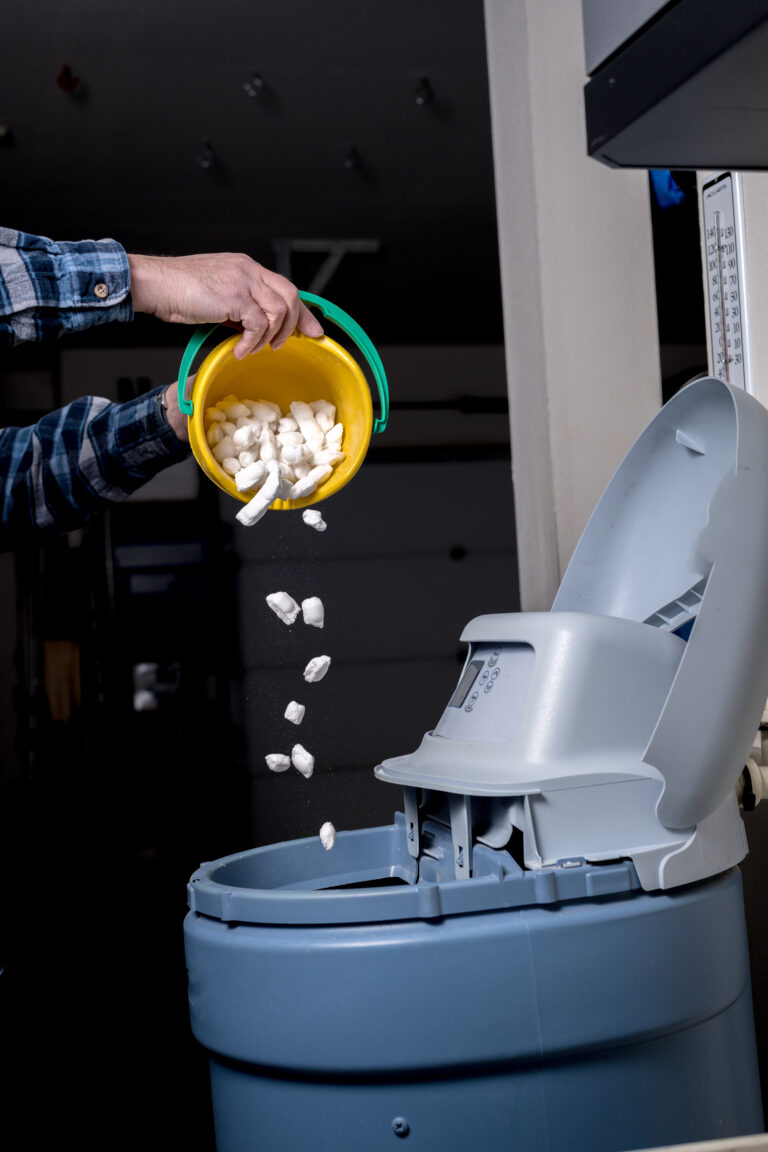
In Doylestown and the surrounding Bucks County area, water hardness is a common concern. Much of the region’s water—especially from private wells—contains elevated levels of calcium and magnesium. To understand your specific mineral levels, we recommend starting with professional water testing in Doylestown, PA. Local geology plays a big role here. Southeastern Pennsylvania sits on limestone-rich bedrock, which naturally contributes to higher mineral content in groundwater.
Even homes connected to municipal water sources aren’t immune. While public utilities typically treat water for safety, they may not always address hardness unless it reaches extreme levels.
When to Get Your Water Tested
The only way to know for sure whether you need a softener is to test your water. A basic test will measure your water’s hardness in grains per gallon (GPG) or milligrams per liter (mg/L). In general:
- 0–3 GPG = soft water
- 4–7 GPG = moderately hard
- 8–10 GPG = hard
- 11+ GPG = very hard
Anything over 7 GPG can start to affect your home and comfort in noticeable ways. Testing is especially important if your water comes from a private well, since private sources aren’t regulated like municipal systems and can change over time.
Benefits of Installing a Water Softener System
Choosing to install a water softener system isn’t just about preventing buildup on your faucets. It’s a long-term investment in your home, your health, and your peace of mind. For many families in Doylestown, soft water becomes one of those upgrades they wonder how they ever lived without.
1. Healthier Skin and Hair: Hard water makes it harder to rinse away soap and shampoo, which can leave skin feeling dry and hair looking dull or brittle. With soft water, everything rinses cleaner. Showers feel gentler. Skin tends to stay more hydrated. For families dealing with eczema or sensitive skin, this shift can make a real difference.
2. Longer-Lasting Appliances: Hard water is tough on appliances that use water—dishwashers, washing machines, water heaters, even coffeemakers. Mineral deposits build up over time, reducing efficiency and shortening the lifespan of these machines. Soft water helps keep internal components clean, which means fewer breakdowns and a longer return on your investment.
3. Lower Energy Bills: Mineral buildup inside hot water heaters creates a barrier that makes the unit work harder to heat water. This can drive up energy use—and your monthly bills. A water softener system removes the minerals before they reach your water heater, helping it run more efficiently and use less energy.
4. Cleaner Dishes and Softer Laundry: If you’ve ever pulled glasses out of the dishwasher and found them cloudy or spotted, that’s hard water at work. Soft water doesn’t leave that residue behind. It also helps clothes feel softer, last longer, and retain their color—because mineral buildup isn’t damaging the fibers during each wash.
5. Easier Cleaning: Soap scum, mineral rings in toilets, and scale buildup on fixtures are all common frustrations in homes with hard water. With a softener, cleaning becomes easier and more effective. You’ll spend less time scrubbing and less money on specialty cleaning products that try to undo what hard water causes in the first place.
6. Environmental Benefits: While water softeners do use salt or potassium for regeneration, they can actually reduce your overall environmental impact. Why? Because soft water allows you to use less detergent, fewer cleaning supplies, and lower water temperatures—without sacrificing results. That means less waste and lower utility use, which is good for your wallet and for the planet.
Why Doylestown Homeowners Trust Water-Logix
Choosing the right water softener system is about more than just equipment—it’s about peace of mind. At Water-Logix, we know what’s in Doylestown’s water because we live and work here, too. We’re a local water softener company in Doylestown, built on the belief that every household deserves clean, gentle, and safe water.
Our approach starts with listening. We don’t push products—we test your water, explain what we find, and help you choose a system that truly fits your home and lifestyle. Whether your water comes from a private well or a public supply, we’ll walk you through every step—from selecting the right system to seamless installation and long-term maintenance.
When you work with us, you’re not just getting a water softener. You’re getting local support, expert guidance, and a partner who genuinely cares about the health of your home. We take pride in helping our neighbors enjoy water that feels better, tastes better, and protects what matters most.
If you’re looking for a dependable water softener company in Doylestown, we’d be honored to help. Let’s make sure your water lives up to the quality of your home.
Water Testing FAQs
How long does a water test appointment take?
Our water testing appointments typically take about 20–30 minutes. We collect samples from your tap, perform the tests on site and review the results with you during the same visit.
What does your free water test include?
We focus on the most important water parameters: hardness and iron (which can cause scaling and staining), nitrates and alkalinity (important for health and pH balance), basic chemical indicators like pH, chlorine and total dissolved solids, and copper. These tests give you a solid understanding of your water quality without overwhelming you with unnecessary details.
Do I need to do anything to prepare for the test?
No special preparation is required. It’s helpful if we can access the kitchen sink or another main water source. We’ll handle the rest and explain everything as we go.
Is there any cost or obligation?
Our on‑site water test is completely free, and there is no obligation to purchase anything. After reviewing the results, we’ll answer your questions and, if needed, suggest appropriate treatment options. You decide whether you want to take further action.
Do you test well water?
Yes. We regularly work with private well owners and perform the same free tests on well water. Since well water can pick up contaminants from soils and plumbing, regular testing is a good practice. If our initial tests suggest additional concerns, we can guide you toward further steps.
Why does water quality matter for your home?
- Provides safe drinking water for your family
- Protects plumbing and appliances from scale buildup
- Improves taste and odor of water
- Reduces skin and hair irritation caused by minerals
- Prevents costly repairs from untreated water damage
Ready to Get Started?
Stop guessing about what’s in your water. Our free water testing gives you clear, reliable answers about hardness, nitrates, chemical balance, and copper levels. The on-site testing process is quick, convenient, and respectful of your time and privacy. Contact us today to schedule your test and take the first step toward cleaner, safer water for your home or business.