Water Softeners
Softer Water. Cleaner Home.
Stop hard water scale, protect your appliances, and enjoy better skin & hair with a professionally sized and installed Water‑Logix water softener.
Why Soften Your Water?
There are plenty of reasons homeowners choose water softeners for their water. Here are some of the most important:
Prevent scale on fixtures, glass and tile: No more cloudy glassware, white rings around the faucet or chalky buildup in the shower. Softened water helps keep surfaces shiny and bright, reducing the time you spend scrubbing.
Extend water‑heater and appliance life: Scale acts like insulation inside your water heater and dishwasher, forcing them to work harder and wear out sooner. A softener dramatically reduces scale, which can extend appliance life and improve energy efficiency.
Use less soap and detergent: Hard minerals interfere with the cleaning power of soaps and detergents. With soft water, you’ll need less shampoo, laundry detergent and dish soap to get the same clean—and you’ll see fuller lather with less product.
Smoother skin and softer hair: Soft water rinses clean, leaving no mineral residue on your skin or in your hair. Many people notice fewer dry patches and frizz after switching.
Protect your plumbing: Reducing hardness protects valves, faucets and pipes from accumulating scale that can restrict flow and cause leaks.
We test on‑site and size your system to your water hardness, iron, and household usage
Popular Water ‑ Logix Water Softeners
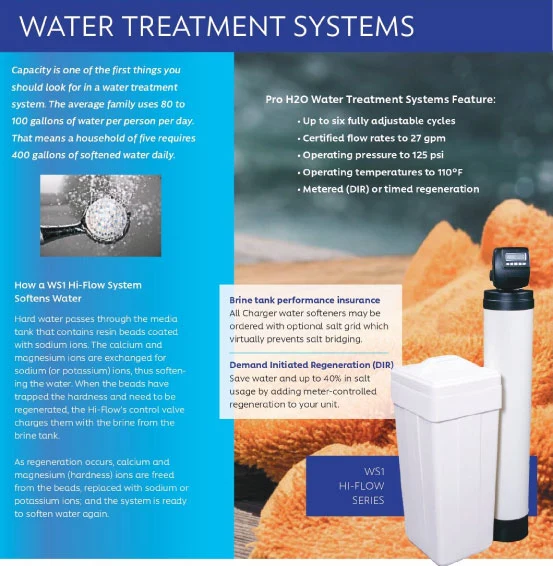
Public Water Softeners
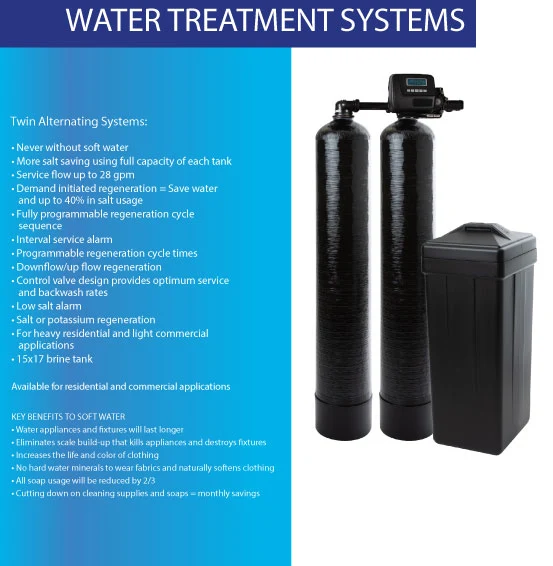
MX Conditioner Plated System
- Great for 3–5 people
- High-capacity resin
- Optional iron reduction
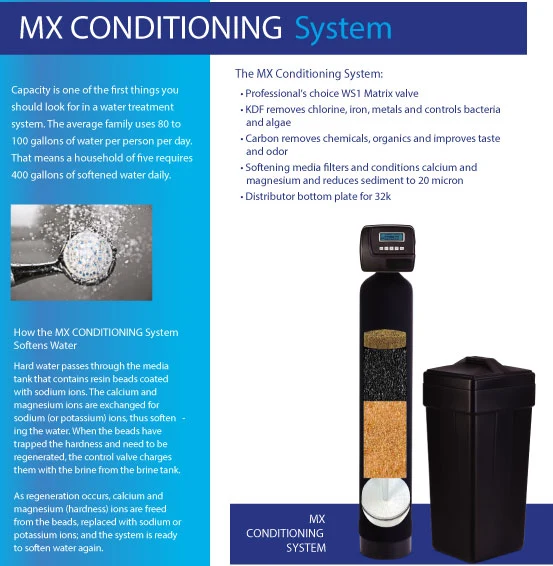
Pro+ Series
- Large homes & light commercial
- Twin‑alternating options
Note: Final sizing is based on water test results (hardness, iron, manganese), number of fixtures, and household use
How Water Softeners Work
Water softeners remove hardness minerals through a simple exchange process. Here’s what happens inside the unit:
Resin beads attract minerals: A softener tank is filled with small resin beads. Hard water flows through the tank and the beads grab onto the calcium and magnesium that cause scale.
Sodium or potassium is exchanged: In return for capturing those hardness minerals, the beads release tiny amounts of sodium or potassium into the water. This “exchange” transforms hard water into soft water.
The resin needs cleaning: After a while, the beads become saturated with hardness minerals and can’t hold any more. To keep working, they must be cleaned.
Regeneration with a brine solution: The softener draws in salty water from its separate brine tank and flushes it through the resin. The salt solution knocks off the accumulated calcium and magnesium and sends them down the drain.
Back to normal operation: Once the resin is refreshed, the softener rinses away the excess brine and returns to providing soft water. Modern systems monitor your household’s water use and regenerate only when needed, which saves salt and water.
Softened water no longer leaves scale in pipes or on fixtures, and soaps and detergents work better because they aren’t fighting mineral buildup. The added sodium is minimal—often less than what’s in a slice of bread—but you can use potassium chloride if sodium intake is a concern or bypass the softener for a drinking tap.
What You’ll Notice Right Away
- Spot‑Free Shine: Dishes and shower doors come out clear—no more chalky film or white spots.
- Gentle on Skin & Hair: Soft water rinses clean, so soaps and shampoos work better and rinse faster.
- Lower Maintenance: Protects valves, fixtures, and water heaters from scale so they last longer
Water Softener FAQs
Will a softener remove chlorine or PFAS?
No. Standard softeners are engineered to remove hardness minerals. If your water has chlorine or chloramine from municipal treatment, you can add a whole‑home carbon filter. For PFAS, lead or other contaminants, we offer PFOAS removal systems and point‑of‑use reverse‑osmosis systems.
How much salt will I use?
Because our units regenerate based on actual water use, salt consumption varies with your hardness level and daily usage. Typical households go through one or two 40‑pound bags per month. Using high‑purity salt or potassium chloride can improve performance and reduce maintenance.
What maintenance is required?
Keep an eye on the brine tank and refill it with salt as needed. The control valve and resin bed should be inspected annually to ensure efficient regeneration and proper operation. We offer service plans and on‑call support to handle routine maintenance or troubleshooting.
Do water softeners add sodium to my drinking water?
Softening exchanges calcium and magnesium ions for sodium or potassium ions. The added sodium is minimal—roughly 7.5 mg per quart of water per grain of hardness removed—well below the sodium content of most foods. If you prefer, you can bypass the softener for a kitchen tap or choose a potassium‑based system.
Free On‑Site Water Test
Every household’s water is different. Before we recommend a system, we perform a complimentary on‑site test for hardness, iron, total dissolved solids (TDS), pH and chlorine. We’ll walk you through the results, explain what they mean for your home and help you choose a system that’s matched to your water conditions and daily water usage. There’s no obligation—just clear information.
Get Pricing & Availability
Tell us a bit about your home, and we’ll follow up with tailored options and a no‑pressure quote.
- Professional installation by insured technicians
- Clean, code‑compliant plumbing and setup
- Warranty & local suppor