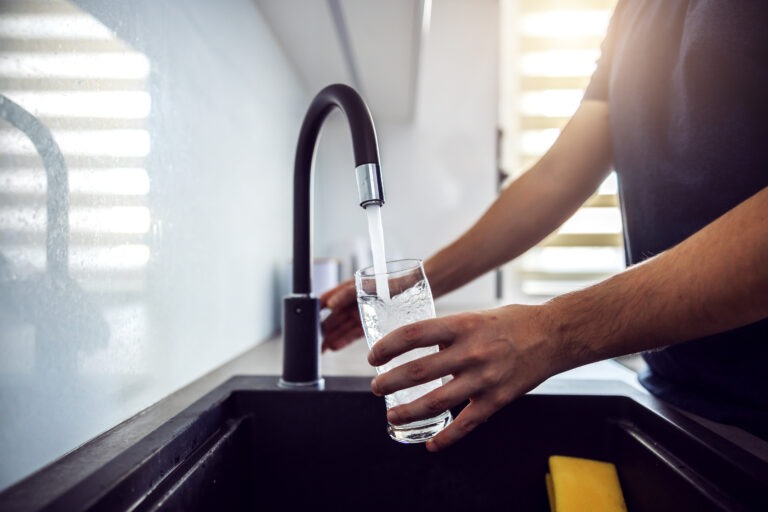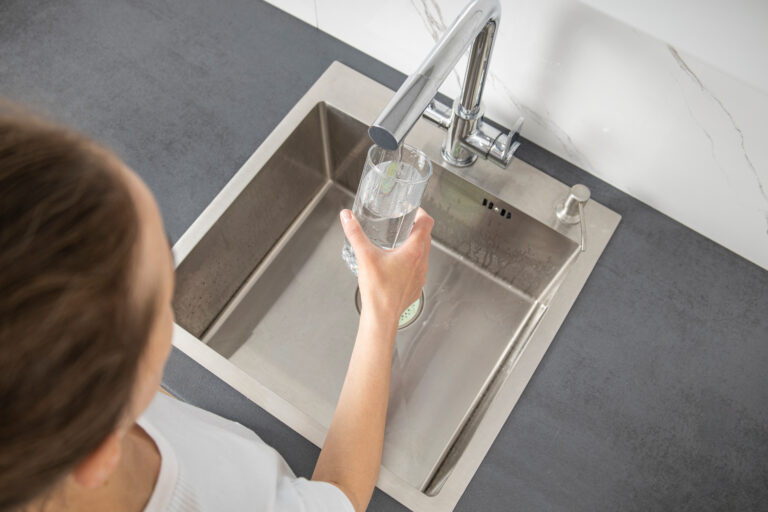
If you live in Bucks County, your home likely connects to a municipal water system. While public utilities must meet EPA safety standards, many families find that tap water still contains impurities. These contaminants often affect taste, odor, and even long-term health.
Municipal water is not always as clean as it seems. It frequently contains:
-
Chlorine and chloramine
-
Sediment
-
Trace pharmaceuticals
We explore how public water is treated and which chemicals are commonly used. We also examine whether it is truly safe to drink straight from the tap and how to choose the right water filter for municipal water in Bucks County. The goal is always the same: providing clean water you can trust.
How Do Municipalities Filter Water?
Most municipal systems in Pennsylvania, including those in Bucks County, follow a multistep process that typically includes:
-
Coagulation & Flocculation: Utilities add chemicals like alum to bind with dirt and particles. This forms larger clumps called floc.
-
Sedimentation: These heavy clumps settle to the bottom of a large basin.
-
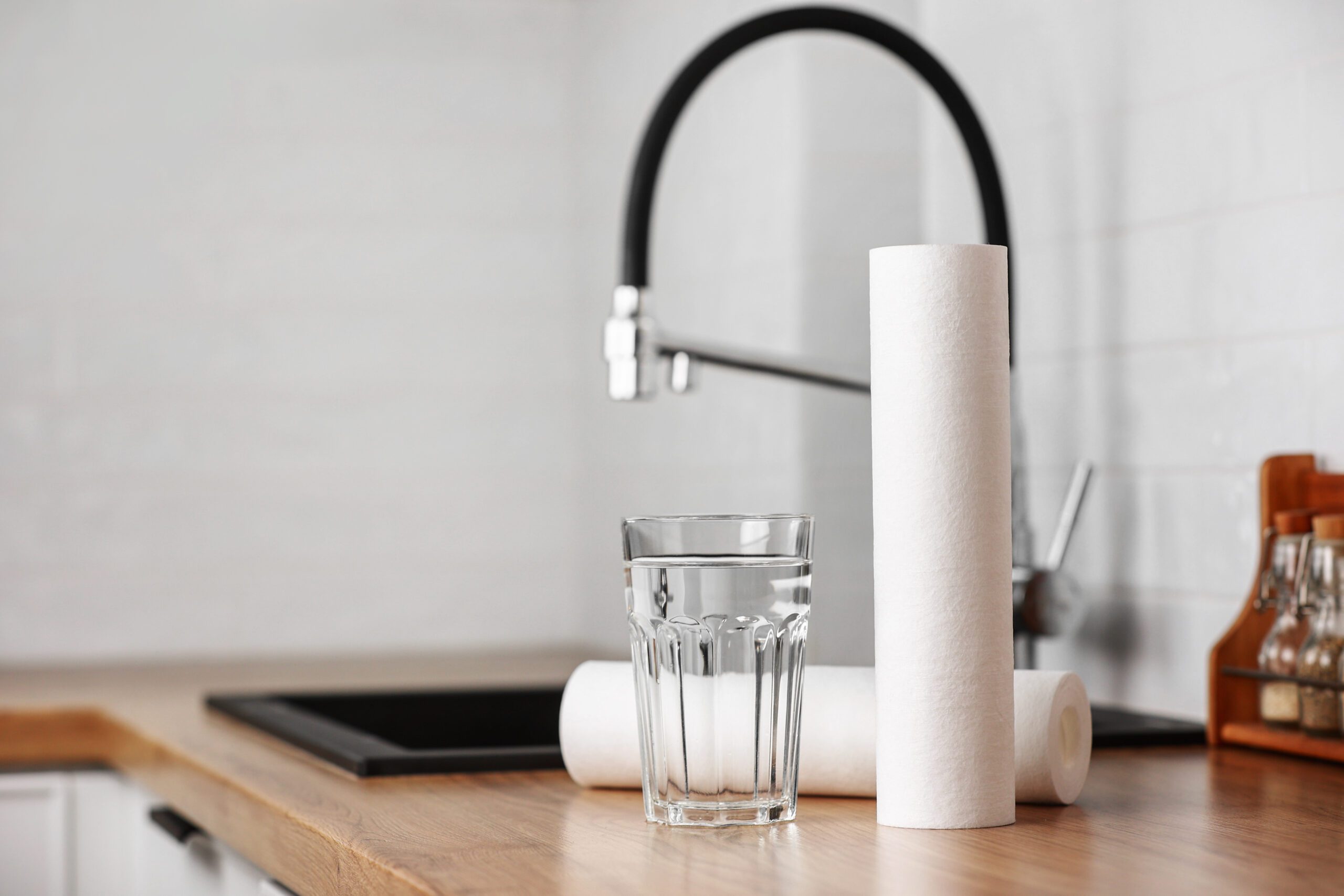
Filtration: The remaining water passes through filters made of sand, gravel, or charcoal to remove smaller particles.
-
Disinfection: Operators add chlorine, chloramine, or other disinfectants to kill bacteria, viruses, and microorganisms.
-
Distribution: The treated water is pumped into underground pipes and sent to homes and businesses across the county.
While this process effectively reduces harmful contaminants, it does not always remove trace pharmaceuticals, microplastics, or disinfection byproducts. This is where in-home filtration provides the extra layer of protection your family deserves.
Is Municipal Water Safe to Drink?
Municipal tap water in Bucks County—and across the U.S.—is regulated by the Environmental Protection Agency (EPA), which sets Maximum Contaminant Levels (MCLs) for over 90 potential pollutants. These include microorganisms, disinfectants, metals like lead and copper, and various chemical byproducts.
On paper, this means municipal water is considered “safe” to drink. But for many families, that assurance doesn’t always tell the full story.
Here is why a municipal water filter remains essential:
-
Safety Standards vs. Health Goals: The EPA sets enforceable limits based on what is practical for large utilities. These standards do not always align with the healthiest possible levels. Some contaminants stay below legal limits but still raise concerns for long-term health.
-
Aging Infrastructure: Older neighborhoods in Bucks County, especially in towns like Bristol or Yardley, may have aging pipes. These pipes can leach lead or harbor biofilm, which affects water quality right before it reaches your faucet.
-
Chlorine & Chloramine: These disinfectants control microbes but often ruin the taste and smell of your water. They can also react with organic matter to form disinfection byproducts, which are linked to various health risks.
-
Contaminant Variability: Seasonal runoff, industrial activity, and local construction cause frequent changes in water composition. Your utility’s annual water quality report may not reflect these sudden spikes in contaminants.
So while municipal tap water is safe by regulatory standards, it may not meet your personal standards for purity, taste, or peace of mind. That’s where the right water filtration system becomes an important household decision especially in a health-conscious community like Bucks County.
Which Chemical Is Used to Purify Municipal Tap Water Systems?
The most common chemicals used to purify municipal tap water are chlorine and chloramine. These disinfectants are essential for killing bacteria, viruses, and other pathogens. While they serve an important role in public health, they come with trade-offs that homeowners in Bucks County should understand.
Here is a closer look at these additives:
-
Chlorine: Used for over a century, chlorine is highly effective at neutralizing harmful microorganisms. However, it often leaves a noticeable “pool-like” taste and smell. It can also react with organic matter to form disinfection byproducts like trihalomethanes (THMs) and haloacetic acids (HAAs).
-
Chloramine: This is a combination of chlorine and ammonia. Utilities use it because it stays active longer in the pipes. Chloramine has a milder taste than chlorine, but it is much harder to remove with standard carbon filters. It can also cause skin and respiratory irritation in sensitive individuals.
-
Other Additives: Municipal water may also contain fluoride for tooth decay prevention, corrosion inhibitors to reduce lead leaching, and pH adjusters like lime or soda ash.
In towns like Doylestown, Quakertown, and Fairless Hills, water authorities use a mix of these chemicals based on the source water quality. While these additives make water microbiologically safe, they do not remove chemical pollutants or heavy metals.
Many Bucks County homeowners now use in-home systems designed to filter out both the disinfectants and their chemical byproducts.
Water Filter for Municipal Water in Bucks County: What to Choose?
Choosing the right water filter for municipal water in Bucks County starts with understanding what you want to remove—and what peace of mind looks like for your household. With dozens of filtration options available, the key is finding a system that’s designed for your specific water quality and lifestyle.
Here are some of the most effective options for families in Bucks County:
1. Activated Carbon Filters
Great for reducing chlorine, chloramine, taste, and odor. These are found in pitcher filters, faucet-mounted filters, and whole-house systems. While effective for basic filtering, they may not catch all contaminants like heavy metals or nitrates.
- Best for: Improving taste and removing chlorine byproducts.
- Common in: Towns using chlorinated water like Levittown and Warminster.
2. Reverse Osmosis (RO) Systems
- RO systems use a semipermeable membrane to remove a wide range of impurities, including lead, arsenic, nitrates, fluoride, and even some pharmaceuticals.
- Best for: Households that want maximum contaminant removal.
- Common in: Homes near agricultural runoff areas like Perkasie or Dublin.
3. Catalytic Carbon + KDF Filters
These are advanced systems that target chloramine and heavy metals like lead and mercury. KDF (Kinetic Degradation Fluxion) media also controls bacteria and scale buildup.
- Best for: Homes served by chloraminated systems (like parts of Langhorne or Bristol).
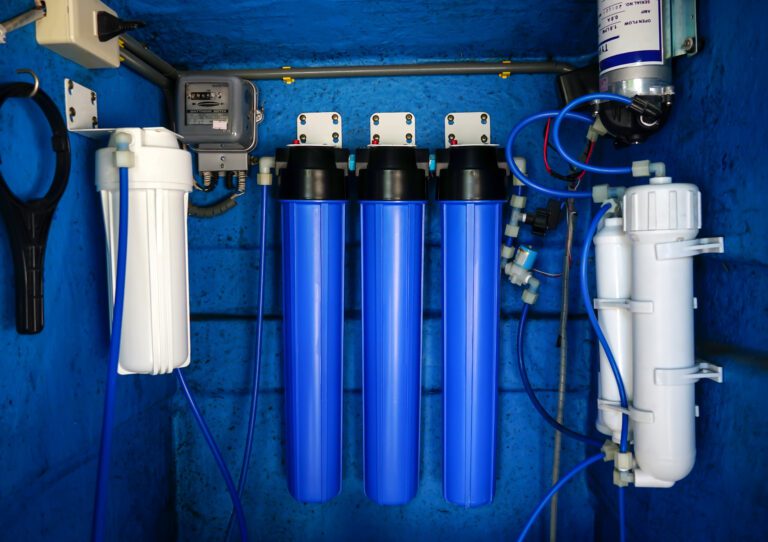
4. Whole-House Water Filters
Installed at the point where water enters your home, these filters provide comprehensive coverage for all water outlets—showers, laundry, kitchen, etc. They’re ideal for families concerned about skin sensitivity, respiratory irritation, or appliance longevity.
- Best for: Families with young children, immune-compromised members, or skin conditions like eczema.
5. UV Disinfection (Add-On)
While municipal systems already disinfect water, UV can serve as a final safeguard—especially helpful for families with private plumbing systems or post-treatment storage tanks.
- Best for: Added protection against bacteria and viruses.
At Water-Logix, we always start with a detailed water analysis so we can recommend the right solution—not just any filter. Whether you live in Chalfont, Hellertown, or Warrington, our goal is to match your water quality with a filtration system that’s effective, affordable, and easy to maintain.
Municipal Water Filtration in Bucks County
At Water-Logix, our mission is simple: to provide Bucks County families with cleaner, safer, and better-tasting water without any confusion. We specialize in helping homeowners choose the right water filter for municipal water. We offer professional testing, expert guidance, and filtration systems tailored to our local water conditions.
Whether you deal with chlorine taste in Warminster, chloramine sensitivity in Yardley, or want peace of mind in Chalfont, we are here to help. We do more than just sell filters. We solve water problems. Our team takes the time to understand your specific situation, explain your options in plain language, and install solutions that actually work.
Here is what you can expect when you work with Water-Logix:
-
Complimentary water testing and system consultations.
-
Tailored recommendations based on your municipality’s treatment methods.
-
Professional installation and ongoing service support.
-
Friendly, local experts who treat your home like our own.
We have helped hundreds of Bucks County households improve their tap water quality. We would be honored to help yours next.
Still deciding what filter is right for you? Let’s start with a conversation. We’re here when you’re ready.